I pre-ordered this book when I read about it coming out. Partly I pre-ordered it because I read Blue Like Jazz by Donald Miller but also because if you pre-ordered it you got two freebies with it, the ebook of Blue Like Jazz, and a soundtrack of 16 songs that Miller made in honor of the book. The sound track seemed like a fun idea. I just downloaded it and started to play it for the first time.
It turned out, though, that I liked the book more than I'd even expected I would. I kind of devoured it. I have been thinking a lot about how to be more...essential? ...transparent? ...vulnerable? Not sure of the best word. I think of it as "Mavis being Mavis," not trying to be someone or something I'm not, not worrying so much about what other people might think of me or what I say or do.
This book fed right into this line of thinking. Miller wrote about the process of changing himself while falling in love with his now wife, Betsy. It's about relationships and things he learned about how to be good at relationships. It talks a lot about marriage and falling in love, but you can take what he writes about and apply it to any relationship.
When my brother Dan died, as I've written about before, one of the many things I realized was how important relationships are. It was beautiful to see Dan's friends, including co-workers, and family surround him with faithfulness and love. It made me not just realize but start to live with the priority of building good relationships with whoever is in my life. This book is full of thoughts and stories about how to do that.
It's got some helpful kind of self help type of tips, like 5 kinds of manipulation, but I didn't really feel like I was reading a self help book. It felt like Donald Miller was just talking to me about what he went through and learned. He has a friendly style of writing. It never bored me or seemed like a slog.
I think it'd be a good one for my two sons and wife and girlfriend. There are even online courses for pre-marriage, marriage and parenting. Quite a package deal.
Wednesday, February 04, 2015


Lila by Marilynne Robinson

Lila is set in Gilead, at least the present-day part of it is. Home, too, is set in the town of Gilead, as is, of course, Gilead. I like it when authors write books that interlace the way these 3 do. There are different main characters, different plots, different times, but it's kind of like catching glimpses of old friends from other books. Barbara Pym does a good job with this, too.
Lila is the name of, and story of, the woman who becomes the wife of Reverend Ames, the main character in Gilead. She's a strange character. She grew up very poor, mostly looked after by a woman named Doll. Doll and Lila lived a kind of hobo life. The book begins when Lila is alone, grown, and staying in an abandoned house in the town of Gilead.
It's been quite a while since I read the book and I had to take a look to remember if the book was written in first person or not. Even though it is not, it kind of felt like you were inside Lila's head, and seeing the unfolding of events from her perspective.
You follow the progression of her relationship with "the Reverend," as she calls him. It is a strange coupling, it seems. They are so different. Yet there is a lot of attraction between them, and they do love each other. Reverend Ames, who knows so much about theology and faith, and who is so much older than Lila, is fascinated by her even though she is so "un-scholarly" compared to him, and kind of "un-eloquent," too. But she's wise. And she loves him, too.
It's hard for me to write about Lila in a way that makes it sound interesting. I'm not sure what to say. Partly, it is such a good book because Marilynne Robinson is such a good writer. It always sounds kind of off-putting to me when someone says they love a book because the writing is so good. It makes me imagine beautiful descriptive passages. They ARE beautiful, but I often start to skim them as I get involved in the story and just want to read for the story, not the writing.
Maybe instead of saying it's so good because of the writing, I could say it's because of Robinson's wonderful way with words. I am all about the story, especially in fiction, and Robinson writes so that I do get into the story. Yet, without making me annoyed by moving away from the story, she fits in flashbacks and passages of inner thoughts.
Tuesday, April 15, 2014
Festival of Faith & Writing 2014
I started writing a bunch of Festival notes under my photo gallery but then thought it would probably fit better if I write a blog and embed the pictures. It'll be long but basically I'm transposing little notes I took at the Festival. Most were sentences/quotes that I found thought-provoking.
My photos:
http://moonfamily.smugmug.com/Travel/Festival-2014
Faith & Writing Festival:
http://festival.calvin.edu/
Speakers:
http://festival.calvin.edu/plan/speakers/
Gene Luen Yang
 Is Art Selfish? was the name of Yang's talk. I had never heard of Gene Luen Yang, but he was so interesting. Definitely want to read and learn more. He's a graphic novelist but prefers to call himself a cartoonist. He spoke on whether art is selfish or selfless. When you write you are alone and need to shut yourself off from others. He has 4 kids and had a photo of a tiny child's hand sticking out from under the door of the room he writes in. They bang and knock on the door.
He asked his wife, "Is art selfish?" and her answer was, "It can be."
He spoke of 4 points:
 Screenwriter / Filmmaker. he showed a documentary he directed called "Battlefields to Farmfields."

My photos:
http://moonfamily.smugmug.com/Travel/Festival-2014
Faith & Writing Festival:
http://festival.calvin.edu/
Speakers:
http://festival.calvin.edu/plan/speakers/
Gene Luen Yang
He asked his wife, "Is art selfish?" and her answer was, "It can be."
He spoke of 4 points:
- Art as an icon - Intense discipline to point you to something higher than self, our stories as part of a lineage.
- Art as prayer - Holy Spirit work to create something else. Tame the "monkey mind" to get to flow.
- Art as an organ - Like a liver. Vital, can't function without it.
- Art as our act of service - Collection of stories that bind a community together.
From the interview. Boxers and Saints based on the Boxer rebellion.

He spoke extemporaneously and genuinely about living a good Christian life.
One of McBride's pieces of advice was to forget about mistakes. Try, and then just let it go, put it behind you, then try again later.
- It's really irritating that Jesus talked in story.
- He never wrote anything, only in the sand.
- If only he'd written on paper -- like, bullet points
- His (Yang's) heroes of faith:
- Henri Nouwen - Caring for others out of your own brokenness. Don't have to be complete to help others.
Scott Cairns
Time to write:
- start with reading
- poring over a line or two
- praying for something to come of it.
- writers who have found a way to find things to say
Discipline - language - pursuit of truth.
Wallace Stevens poem - "The Idea of Order at Key West."
Make good friends with accomplished dead people.
Midrash says, "And another interpretation might be...."
Threnity - song or poem for the dead
Kol Nidre - recanting from ill-considered vows.
Saint Isaac of Syria / Ninevah - rominent in The Brothers Karamazov.
Poem = Not pointing to or at; not a document of meaning made, but a scene of meaning making.
Language that provokes a vision and more.
People he reads:
- Simeon the Theologian
- W.H. Auden
- Samuel Coleridge
- Emily Dickinson
- Constantin Kovafy
- Elizabeth Bishop
- Robert Frost
Idiot =
- Monks who have their own rule
- Monks who share a rule
Isolated figure. Also, the fool - concern for other, bigger than self.
An idiot who hopes to become a fool.
Writing = coming to terms, but not conclusive. Get more from it each time.
Poem - opportunity to make something useful to the reader.
http://www.faithandleadership.com/qa/scott-cairns-words-lead-you-ideas
http://www.faithandleadership.com/qa/scott-cairns-words-lead-you-ideas
James McBride

One of McBride's pieces of advice was to forget about mistakes. Try, and then just let it go, put it behind you, then try again later.
Love and faith are action words.
http://www.jamesmcbride.com/
http://festival.calvin.edu/plan/speakers/james-mcbride/
http://www.jamesmcbride.com/
http://festival.calvin.edu/plan/speakers/james-mcbride/
Brett Lott
- The word "Christian" was never meant to be a modifier, like "Christian plumber," "Christian writer." It makes it a lesser person. We are people who are Christians.
- Descriptions - Triangulate - Points us to a known item to help us know the thing.
- To write precisely, you must be there. Paying attention. Inside the story itself.
- Precision calls for patience, stumbling over.
- Exercise:
- She steps onto the boardwalk, unnerved to hear it creak
ingunder her feet. - Take the "ing" out. "Creaking" is a gerund, and implies always happening. Make it "creak." Don't rob it of its power.
- Marilynne Robinson - You should always think of your audience as someone who's a little smarter than you.
- Show emotion, don't tell.
http://thegospelcoalition.org/blogs/justintaylor/2013/06/12/bret-lott-on-being-a-christian-who-is-a-writer/
http://festival.calvin.edu/plan/speakers/bret-lott/
http://festival.calvin.edu/plan/speakers/bret-lott/
Richard Foster
- Words matter. They are the best carriers of idea. And ideas rule the world.
- We are what we think about.
- Allow our words to be grounded in silence.
- Distraction is a key problem.
- Need silence - discipline.
- Silence is writing.

It was inspiring. It's a program to get vets into growing food. They find it calms their troubled minds and it also gives them a new purpose in life - to grow food for the world. More about it here:
It started in Santa Rosa. I'd like to learn more!
http://festival.calvin.edu/plan/speakers/raymond-singer/
Okey Ndibe
http://festival.calvin.edu/plan/speakers/raymond-singer/
Okey Ndibe

I had not heard of Okey Ndibe, either. I loved his voice and manner, and his story. He is from Nigeria and has written several books plus writes essays and commentaries.
Okey Ndibe is working on an autobiography that I hope to read when it comes out. He also is publishing online stories of coming to America. The title begins with "Going Dutch..." He's got intriguing views, looking at the world and religions in a different way than we usually do.
Another book is Foreign Gods, Inc. He mentioned the commodization of gods, buying and selling gods, the ultimate outsider.
Another book is Foreign Gods, Inc. He mentioned the commodization of gods, buying and selling gods, the ultimate outsider.
http://www.okeyndibe.com/
http://festival.calvin.edu/plan/speakers/okey-ndibe/
Rachel Held Evans
 Rachel Held Evans is one of my big favorites who was at the Festival. I've read her books and follow her blog. I wrote a note to a friend after listening to her interview: "There's a scene in "Notting Hill" where the goofy sister says to the movie star, '...and more importantly I genuinely believe and have believed for some time now that we can be best friends. What do YOU think?' That's kind of how I felt." So much of what Evans said seemed like things I would say or do. She seems like a kindred spirit. I know many others feel the same way.
One scene was really funny. During the Q & A time after her talk, someone asked her about how she responds to people who say she is sowing disunity in the church when she voices some of her differences of opinion and so on. She walked away from the podium, closer to the questioner and started talking about how, often, the status quo works for people, and it's natural that they would object to changing it. She said, though, that it is right to express what you believe is true. Then we all heard a low rumble from outside. She stopped and looked out at the audience. "Is that a storm rolling in?" she asked. Before anyone could answer, she scurried over, back behind the podium, folded her hands demurely, and said quickly, "The church is wonderful just as it is, and we should not cause any disunity." We all cracked up.
Before her interview, I had said to my sister that it seemed kind of a shame to me that several of the speakers had talked about the downside of technology such as social networks, e-books and so on. I actually agree that the internet has changed our behaviors. My own reading is most definitely affected. But I said that I wished we could get into a discussion of the best way to take advantage of the benefits of technology, while still encouraging reading. I felt that affinity to Rachel Held Evans when she turned to the audience and said, "It seems like some of the people here are kind of dissing the internet, doesn't it?" And then she went on to talk about how collaborative her writing is, with involving those who respond to her web-based contributions.
Some quotes/gems from Rachel Held Evans.


http://festival.calvin.edu/plan/speakers/okey-ndibe/
Rachel Held Evans

One scene was really funny. During the Q & A time after her talk, someone asked her about how she responds to people who say she is sowing disunity in the church when she voices some of her differences of opinion and so on. She walked away from the podium, closer to the questioner and started talking about how, often, the status quo works for people, and it's natural that they would object to changing it. She said, though, that it is right to express what you believe is true. Then we all heard a low rumble from outside. She stopped and looked out at the audience. "Is that a storm rolling in?" she asked. Before anyone could answer, she scurried over, back behind the podium, folded her hands demurely, and said quickly, "The church is wonderful just as it is, and we should not cause any disunity." We all cracked up.
Before her interview, I had said to my sister that it seemed kind of a shame to me that several of the speakers had talked about the downside of technology such as social networks, e-books and so on. I actually agree that the internet has changed our behaviors. My own reading is most definitely affected. But I said that I wished we could get into a discussion of the best way to take advantage of the benefits of technology, while still encouraging reading. I felt that affinity to Rachel Held Evans when she turned to the audience and said, "It seems like some of the people here are kind of dissing the internet, doesn't it?" And then she went on to talk about how collaborative her writing is, with involving those who respond to her web-based contributions.
Some quotes/gems from Rachel Held Evans.
- Social media - connection with the readers
- From certainty, through doubt, to faith.
- Recognize doubt and uncertainty are part of faith.
- A lot of people are afraid of grace getting out of hand.
- Get out of the way and let Jesus do his thing.
- The Bible as a conversation starter, not a conversation ender.
- Jesus' teachings are annoyingly straightforward.
- Proverbs 31 - This woman is like a Pinterest board come to life!
- The banana of self control. There are so many ways you could make that interesting. (She was referring to how, often when the fruits of the spirit are posted on walls as fruits, self control is a banana because it's the longest.)
- The act of writing is the best part.
- Post-it above her desk: The next sentence is not in the refrigerator.
- Process: Start with animal crackers, move on to more complex carbohydrates.
- Writing is the work of paying attention.
- What makes the gospel offensive is the people it lets in, not those it keeps out.
- Mary Carr, author of Lit, is an author she admires.
- She also reads old prayers as a way to begin writing - Teresa of Avila prayer, Julian of Norwich.
- Other favorites: To Kill a Mockingbird, Mark Twain.
Anne Lamott

Anne I love. I think I've read every book she's written, and I follow her on Facebook. Some gems:
- I don't think we're here to figure it out. "Figure it out" is not a good slogan.
- The way you do one thing is the way you do everything.
- The sacrament of puttering.
- Closet shrinkage.
- Toxic self-consciousness
- "From Mau to Mozart" - documentary she loves.
- Laughter is carbonated holiness.
- We're not hungry for what we're not getting.
- Kill your little darlings - speaking of writing and then editing your writing.
- If you can't find an hour, even Jesus can't help you.
- I have not found inspiration to be a useful tool.
- Voice of distractor and seducer - Have to be firm, strict and nice. You choose which voice.
- You can kind of gently bust yourself...I know, honey, I know.
- Structure and discipline - it's the way to freedom.
- Every day you have to ask yourself, "Do you want the hit or the serenity?"
- We hope for the wrong things.
- People don't need as many casseroles ad you may have thought. I really think it's helpful to offer to do the laundry.
- Barry Lopez - When all is said and done, all we have is compassion and stories.
- Barbara Johnson - We are Easter people in a Good Friday world.
- Can only do it in community.
- Christianity is Jesus saying, "Got a minute?"
- Grant me the serenity to accept the things I cannot change..which is everyone else...and the courage to change the things I can...which is me.
- Annabel - Kathleen Winter - about Inuit in Canada. Ulitmate story of restoration.
- Authors she loves:
- Mary Oliver
- Adrienne Rich
- Fredrick Buechner
- We don't share our good ideas with people so that we may be more comfortable.
James Schaap

Jim read from a poem he is planning to publish, still in draft form. It reminded me of "Our Town." The narrator is based on a reporter from a small Iowa town who is dead, talking to the reader who is also dead, introducing him to others in the cemetery "up the hill." He spoke of the dead as "redeemed souls."
I thought it was good writing and I will keep an eye out for the new book.
Miraslov Volf
Volf's talk was the most dense, most truly a lecture, talk I heard. I took tons of notes; there was so much in what he said.
- Theology articulated way of life.
- Exclusion & Embrace
- Two major cultural elements
- Failure of world to secularize and resurgence of religion
- Gradual pushing out of exploration of the meaning of life from colleges and universities
- Expected secularization - help from Hawkings, Stalin, Mau.
- Thought religion was superfluous. Don't need God to explain.
- Thought religion would privatize
- Thought religion would atrophy
- 1990-2000s - Number of Buddhists, Christians, Hindu, Muslims has grown extensively, also relativity.
- Charles Taylor - philosopher, great book.
- People continue to choose religion for many reasons.
- One reason, central, is:
- Faith explains the world.
- Also, faith manipulates people
- Presumes faith, like science, is to explain and manipulate.
- Vigorous debate. Debate is misdirected. Leaves out religion.
- Augustine: You move us to delight in you. You have made us to delight us. Our hearts are restless until we find you.
- References to transcendence defines us as human beings.
- Secularists presume religion needs explaining. But religion presupposes humans need religion.
- When we rest in God, it becomes the axis of our being. To be free and flourishing, life is to be lived in relation to the divine.
- World faiths bring people to transcendence, so their lives have purpose and meaning.
- Science doesn't compete with this.
- Now the debate is, how do we understand transcendence?
- Pushing out the quetion of the meaning of life from colleges and universities.
- End = goal. What is a life worth living?
- Age of purity - goal to parse out the assumed way of life
- Secular humanism - to 1968. Explain meaning of life without religion. Pluralistic.
- 1968 - all changed - Question of life's meaning has ceased to be recognized. Professors swa themselves as scholars, not there to discuss that question, just advancing knowledge.
- Humanities lost out and are at the bottom of a hole, according to a scholar he was talking about.
- Volf thinks more important: You can see a loss of understanding of human nature. As many meanings of life as there are individuals.
- Faith leaders may or may not contribute to this.
- Decisions about life worth living are chosen by preference, like consumerism.
- Stream of new goods is an opiate of people.
- Preferences come under the meaning of life.
- In university, it is about research, the question is how.
- Question for humans is, "to what end?"
- We have lost the ability to deliberate.
- He teaches a course looking at religions/philosophy and ask how would your life change if you followed each religion or philosophy?
After this session I was thinking especially about the part where Volf spoke about preferences, about how we make decisions based on preferences rather than on what will give us a life worth living, help us to answer "to what end." I had been involved in a conversation with two young women discussing choosing a church to join when moving into a new area. I wondered how thinking about this would affect that decision. Rather than preferences, thinking what church would help you to live a life worth living, help you answer "to what end?"
Amy Leach
Another author I had not heard of. She is very animated, almost hyper, extremely cheerful, exudes enthusiasm. Some gems.
- Degree in "creative non-fiction."
- Thinking new thoughts - session was on how to encourage thinking new thoughts.
- How can we think independent thoughts?
- I get out of my own ruts, go to things without preconception.
- Why should conversations be so much more understandable than experience?
- Reading old books illuminates our current times
- A longing/yearning to think new thoughts.
- Don't be satisfied with the beginning thoughts. Keep thinking to find new thoughts.
- Find surprising words - dictionary, old poetry.
- Some authors:
- Edward Lear
- Thomas Carlyle
- Lewis Carrol
- Laura E. Richards
- Felicia Lamport
- Shel Silverstein
Saturday, January 18, 2014
Dearie by Bob Spitz
 |
| Dearie, the Remarkable Life of Julia Child |
I haven't written here in a while and now I notice that the last time I wrote it was about Julia Child's best friend, Simca, and now I'm writing about her biography.
Our bookclub chose this book on the recommendation of one of the members who is a fantastic cook. I've been an admirer of Julia Child for quite a while, and have read her memoir, My Life in France. (By the way, that was written with the help of her nephew, Alex Prud'homme, and was used as inspiration in the movie "Julie and Julia," written and directed by Nora Ephron.)
I liked this book a lot. Bob Spitz did a great job of filling the book with facts and details, yet making it interesting and fun to read. In his Afterword he writes about having written a "tome" about the Beatles. Now that I've seen his work, I may check that out, too.
But to get back to Dearie, I loved getting to know Julia Child more. Did you know she was actually 6'3"? I guess she told people she was 6'1" but she was shaving off a couple inches. And her sister "Dort" was 6'5", their brother was 6'4". Have to love a tall family! She seems to have never let it bother her. She sort of galloped through life, making her presence felt wherever she went.
She was not perfect by any means, but what a wonderful woman! She had lots of fun as she grew up in California, in a fairly wealthy family, but she didn't figure out what she really wanted to do until she was somewhere in her 40's, I think it was. That was part of the memoir and movie: her discovery of her love of French food when she went to Paris with her husband Paul, and then going to culinary school to become a chef.

She was not sentimental, though. She was practical in matters of money, for example. She really did not make a whole lot of money for many years of her cooking, TV and book-writing career, and part of the reason for that was her loyalty to those who contracted with her in the beginning. Sometimes she was a contradiction - accepting much less pay than she could get elsewhere in some cases, and other times deciding to go with the party that offered the most money even though she had a longtime friendship with the other person involved.
She liked to flout convention and break the rules. That's another one of the things that makes her endearing to me. I sometimes have a tiny problem with authority myself, and it's fun to read about her doing things pretty much only in order to break the rules. One time she was working on the show, "Julia and Jacques," and insisted on drinking beer with the meal they made even though she never drank beer with meals - she always had wine. But Kendall Jackson was sponsoring the show and some of their representatives were watching, and she just wanted to be contrary. As the author wrote, Kendall Jackson did not sponsor any more shows for her. Not the wisest action for Julia to take, but I can't help but laugh.

 By the time she was filming those "Julia and Jacques" shows, she could pretty much get away with anything. She was truly the queen of the cooking scene, treated like royalty wherever she went. Usually she was kind and gracious to her admirers. Even when she didn't approve of a chef's methods or foods, she would avoid unkindness and find some way to say something encouraging.
It was interesting to learn about her writing, too. Julia took her cookbooks very seriously. She tested every recipe over and over. She'd call authorities to learn the chemistry of ingredients, or the best cuts of meat, or any other answer she needed. It's no wonder it took her years to complete the books. She worked hard and put in long, exhausting hours. Julia spurned cookbooks with vague recipes and made sure hers were precise in measurements and instruction. I've been trying new recipes lately and have come to appreciate those precise recipes.
I highly recommend the book. You'll enjoy getting to know a remarkable woman. Julia Child has been and continues to be one of my heroes.
Monday, September 02, 2013
Food & Friends - A Feast of a Book
I'm reading a book I picked up on sale at a cool bookstore in Santa Cruz. The first time I went there I took a picture of the shelves full of handwritten notes by the staff. Love that.
 That was when I was on our "Woman Time at the Ocean" weekend.
A couple weeks ago Cori and I went to Santa Cruz for the day and spent quite a bit of time in the bookstore. I picked up 6 books on the way from the bathroom back to where Cori was. Bookstores are dangerous locations for me.
Right now I'm reading one of those books. It's called Food & Friends, by Simone Beck. She was the co-author of Mastering the Art of French Cooking with Julia Child.
I'm really enjoying this book. I like that it's a feast for the eyes as well as a good read. Look at these details.
 Look at these hand drawn illustrations. And the borders around the pages. And the different fonts. And the little decorations between the headings.
 See the first letter of the chapter?
 Here's one of the many recipes in the book. Pretty to look at, and I like the little personal note, "Orange-flavored chocolate cake, for Jean." (Jean was her husband.)
 Even the photos are kind of old-timey and nostalgic.
Beyond that, I'm enjoying the read. Simone was born in France before World War I. Her father was a soldier in that war. Then she lived through World War II. I'm not finished with it yet. I've read through her description of her childhood, which included recipes of foods she learned from her family's cook, Zulma, and through her first marriage, that includes recipes she learned while living in Paris. Now I'm at the part where she's divorced her first husband and has just married Jean, the love of her life.
I am looking forward to finishing the book, and also trying some of the recipes.

A couple weeks ago Cori and I went to Santa Cruz for the day and spent quite a bit of time in the bookstore. I picked up 6 books on the way from the bathroom back to where Cori was. Bookstores are dangerous locations for me.
Right now I'm reading one of those books. It's called Food & Friends, by Simone Beck. She was the co-author of Mastering the Art of French Cooking with Julia Child.
I'm really enjoying this book. I like that it's a feast for the eyes as well as a good read. Look at these details.


Beyond that, I'm enjoying the read. Simone was born in France before World War I. Her father was a soldier in that war. Then she lived through World War II. I'm not finished with it yet. I've read through her description of her childhood, which included recipes of foods she learned from her family's cook, Zulma, and through her first marriage, that includes recipes she learned while living in Paris. Now I'm at the part where she's divorced her first husband and has just married Jean, the love of her life.
I am looking forward to finishing the book, and also trying some of the recipes.
Sunday, August 11, 2013
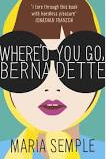
Where'd You Go, Bernadette: A Novel by Maria Semple
 |
| Author's website |
This book was enjoyable but I wouldn't call it great or compelling. It was kind of weird.
Bernadette is the name of the narrator's mother. The book is a compilation of emails and documents that slowly unveil the story of Bernadette's disappearance. The family -- the daughter/narrator, her father and mother -- live in Seattle.
The father works at Microsoft and there's a kind of sub-plot of him, his project at Microsoft (mind-controlled robots) and his affair, or really one-night-stand with his administrative assistant. The mother, Bernadette, is an architect who won the MacArthur genius grant before the daughter was born, and now stays at home and seems to be almost agoraphobic, hardly ever venturing outside her house. The daughter, named Bee, goes to a private school and the super-involved parents, especially two mothers, at the school are central figures in the story, too.
A central part of the story is the fact that the family is planning a trip to Antarctica as a reward for Bee's excellent grades. Before they go, though, Bernadette runs away, escapes, actually, and the family does not go on the trip as planned. Later Bee and her father go, after Bernadette has been gone long enough that many consider her dead or lost forever. Bee has not given up hope, though, and continues to look for her mother.
Because the story is revealed through a bunch of different documents, there are many voices and viewpoints. It's not my favorite way to read a story, but it wasn't as frustrating as that device sometimes can be. I still wanted to keep on reading and find out what happened. The characters and plot are interesting, but I guess I didn't think they were that realistic. Kind of cartoony.
Anyway, it's a light read and not bad.
Saturday, April 20, 2013
National Poetry Month

Phenomenal Woman
by Maya Angelou
Pretty women wonder where my secret lies.
I'm not cute or built to suit a fashion model's size
But when I start to tell them,
They think I'm telling lies.
I say,
It's in the reach of my arms
The span of my hips,
The stride of my step,
The curl of my lips.
I'm a woman
Phenomenally.
Phenomenal woman,
That's me.
I walk into a room
Just as cool as you please,
And to a man,
The fellows stand or
Fall down on their knees.
Then they swarm around me,
A hive of honey bees.
I say,
It's the fire in my eyes,
And the flash of my teeth,
The swing in my waist,
And the joy in my feet.
I'm a woman
Phenomenally.
Phenomenal woman,
That's me.
Men themselves have wondered
What they see in me.
They try so much
But they can't touch
My inner mystery.
When I try to show them
They say they still can't see.
I say,
It's in the arch of my back,
The sun of my smile,
The ride of my breasts,
The grace of my style.
I'm a woman
Phenomenally.
Phenomenal woman,
That's me.
Now you understand
Just why my head's not bowed.
I don't shout or jump about
Or have to talk real loud.
When you see me passing
It ought to make you proud.
I say,
It's in the click of my heels,
The bend of my hair,
the palm of my hand,
The need of my care,
'Cause I'm a woman
Phenomenally.
Phenomenal woman,
That's me.
worms
by Aaron Belz
Cyclists, as a rule, think bikers are cheating,
because they have engines. Pedestrians, in turn,
think cyclists are cheating; they use wheels.
People in wheelchairs think pedestrians
have a leg up, for obvious reasons,
but pedestrians think the same thing
about people in wheelchairs; they use wheels.
What makes people in wheelchairs unique
is that they also think cyclists and bikers
are cheating. Their disdain is uniform.
The wheelchairists' hypocrisy lies,
however, in their use of automobiles.
Everyone uses automobiles except worms.
Worms think they're better than everyone.
Worms think they're more authentic than everyone.
This is why people say worms are self-righteious.
To worms' credit, however, they aren't hypocritical,
except the ones that glide down the sidewalk
on hundreds of tiny legs, blithely ignoring
their wilted, sun-blackened comrades.
These worms are called millipedes.
Those worms are really bad apples.
The Shirt
by Jane Kenyon
The shirt touches his neck
and smooths over his back.
It slides down his sides.
It even goes down below his belt--
down into his pants.
Lucky shirt.
Do Not Go Gentle Into That Good Night
by Dylan Thomas
Do not go gentle into that good night,
Old age should burn and rave at close of day;
Rage, rage against the dying of the light.
Though wise men at their end know dark is right,
Because their words had forked no lightning they
Do not go gentle into that good night.
Good men, the last wave by, crying how bright
Their frail deeds might have danced in a green bay,
Rage, rage against the dying of the light.
Wild men who caught and sang the sun in flight,
And learn, too late, they grieved it on its way,
Do not go gentle into that good night.
Grave men, near death, who see with blinding sight
Blind eyes could blaze like meteors and be gay,
Rage, rage against the dying of the light.
And you, my father, there on the sad height,
Curse, bless, me now with your fierce tears, I pray.
Do not go gentle into that good night.
Rage, rage against the dying of the light.
Funeral Blues
by W.H. Auden
Stop all the clocks, cut off the telephone,
Prevent the dog from barking with a juicy bone,
Silence the pianos and with muffled drum
Bring out the coffin, let the mourners come.
Let aeroplanes circle moaning overhead
Scribbling on the sky the message 'He is Dead'.
Put crepe bows round the white necks of the public doves,
Let the traffic policemen wear black cotton gloves.
He was my North, my South, my East and West,
My working week and my Sunday rest,
My noon, my midnight, my talk, my song;
I thought that love would last forever: I was wrong.
The stars are not wanted now; put out every one,
Pack up the moon and dismantle the sun,
Pour away the ocean and sweep up the wood;
For nothing now can ever come to any good.
Stop all the clocks, cut off the telephone,
Prevent the dog from barking with a juicy bone,
Silence the pianos and with muffled drum
Bring out the coffin, let the mourners come.
Let aeroplanes circle moaning overhead
Scribbling on the sky the message 'He is Dead'.
Put crepe bows round the white necks of the public doves,
Let the traffic policemen wear black cotton gloves.
He was my North, my South, my East and West,
My working week and my Sunday rest,
My noon, my midnight, my talk, my song;
I thought that love would last forever: I was wrong.
The stars are not wanted now; put out every one,
Pack up the moon and dismantle the sun,
Pour away the ocean and sweep up the wood;
For nothing now can ever come to any good.
Hope is the Thing With Feathers
by Emily Dickenson
Hope is the thing with feathers
That perches in the soul,
And sings the tune without the words,
And never stops at all,
And sweetest in the gale is heard;
And sore must be the storm
That could abash the little bird
That kept so many warm.
I've heard it in the chillest land,
And on the strangest sea;
Yet, never, in extremity,
It asked a crumb of me.
by Emily Dickenson
Hope is the thing with feathers
That perches in the soul,
And sings the tune without the words,
And never stops at all,
And sweetest in the gale is heard;
And sore must be the storm
That could abash the little bird
That kept so many warm.
I've heard it in the chillest land,
And on the strangest sea;
Yet, never, in extremity,
It asked a crumb of me.
Friday, March 01, 2013
Life, God, and Other Small Topics: Socrates in the City edited by Eric Metaxas
 |
| Review by my brother and a friend |
Socrates in the City was started by Eric Metaxas "with the simple idea that the philosopher Socrates was quite right when he famously said that the 'unexamined life is not worth living.'" He decided to bring some people who were asking and thinking about the "Big Questions" to New York, invite a few friends and serve some wine and hors d'oevres.
Each section of the book is one of the speeches by these thinkers. It begins with the introduction by Metaxas, then the speech itself, and then a transcription of the question and answer period afterward.
The introductions often make me laugh out loud. I had not actually heard of Eric Metaxas before this but he is a very witty guy. The speeches are wondeful, concise spoken essays about "life, God and other small topics" such as Belief in God in an Age of Science, Making Sense out of Suffering, Can an Atheist be a Good Citizen?, Who Are We? C.S. Lewis and the Question of Man. To name a few. The speakers had to stick to about a 45 minute talk, so they are concise. Each of these topics could be -- and are -- a topic it would take several books to discuss.
I found myself usually reading one and then stopping so I could soak it in and ruminate on it for a while before jumping into the next one. There are so many great quotes it's hard to chose just a few to include. I'll put down a few, though.
The question of truth is as important to religion as it is to science...Of course, science and religion are looking for different aspects of the truth. Science....restricts itself essentially to asking questions of process, which are the "how questions."....Religion is asking a different set of questions, and in my view, more interesting questions...of meaning and purpose: "Is there something going on in what is happening in the world?"
Those seeking to serve the God of truth should welcome truth from whatever source it comes.
So, the fact that there is cancer in the world, which is, undoubtedly, an anguishing aspect of the world and a source of grief and anger to us, is, at least, not gratuitous. It is not something that a God who was a little more compassionate or a little more competent could easily have removed. It is the shadow side of the creativity of the world. It is the necessary cost of a creation allowed to make itself.
To live is to suffer. Therefore, if life has meaning, suffering has meaning, too.
God is intimately present in the worst sufferings. Where was God in the Holocaust? He was in the gas chambers.
God doesn't give us a lot of words to answer the problem of suffering...he gives us a single word, and his name is Jesus.That's just a small sampling from the first few speeches. There was a humorous exchange in one of the introductions that I could relate to as someone who sits in the sound booth often:
Eric Metaxas: Can everyone in this area hear?
Speaker: I am sorry, what should I do?
Eric Metaxas: You should berate one of the sound people.
Speaker: That is cathartic but not very useful.That cracked me up.
But seriously this book is great. I highly recommend it. I plan to send it to a few people, actually, just to encourage them to read it. I like the shortness and conciseness, so people who don't like to read might actually be okay with it.
There is a website for the group Socrates in the City. I hope to explore it and hear more great thinkers and speakers.
Tuesday, February 19, 2013
Half Broke Horses by Jeannette Walls
 |
| Review, summary, etc. |
I thoroughly enjoyed this book. It's kind of a rip-roaring story. Lily is an incredible character. She was so strong and independent. Although her father seemed to appreciate how hard she worked and how invaluable she was on the ranch, still there was never any question that her brother would receive funding to go to college, not Lily. And even when he did send her to school, he eventually stopped paying for that in order to implement a crazy get rich quick scheme of his own.
But nothing stopped Lily. She made her own way, if none was provided. She rode 500 miles by herself through unsettled country for a teaching job. Later she learned to drive and even to fly. She was really amazing. And when you read the author's introductions and acknowledgements you realize that the book doesn't seem to exaggerate; this really was Lily.
She went through some tough and scary times. The book begins with the story of her survival of a huge flash flood that could have easily killed her, her sister and brother. And that's just the first of many adventures. I woke up one night unable to sleep and ended up reading at least half if not more of this book in one sitting. It's just such a good story. You'll love the book -- and Lily.
Bad Religion by Ross Douthat
 |
| Author interview |
My dad also read the book and he remarked it had a lot of numbers. He quoted the line, "There are lies, damn lies, and statistics." True words, but it is pretty evident that church attendance, at least in North America is shrinking.
A big part of our discussion centered on the demise of institutional Christianity, or even more specifically, of denominations. One member, a pastor, said that when he is leading classes for new Christians he includes a discussion of why we should be thankful for the institution of denominations. One reason is that there is someone to appeal to beyond the local church or minister. There won't be a Jim Jones when you're in our denomination. I also am grateful for the ability to do more than a single church could do. Our denomination has a few colleges, a seminary, and many ministries throughout the world.
It was interesting, though, to talk about the future of denominations. Another member said that he had been personally saddened by the, what he feels is, the impending demise of his denomination, not only because of shrinking numbers but also theological divides. He talked about churches doing ministries on a micro-scale, more one-on-one, training each other and holding each other accountable to live out our lives, no matter what we do, as Christians.
In the book, Douthat gives a kind of history of Christianity in the US. He talks about how churches and Christian scholars had authority and influence in the past. He brings up renowned Christians such as C.S. Lewis, Reinhold Niebuhr and others who were looked at and listened to as people who had some authority and credence, but now we don't really have that kind of thing anymore.
Douthat talked about the "accommodationists," who try to figure out ways to make Christianity more accommodating to the general society. I can see his points but I don't really think that those kinds of changes are what caused people to stop going to church in as large of numbers as they did before.
I have a friend who was brought up in a mainline Christian church, he was active in the church's young people's group and his parents are still active in church. But my friend married a woman who has no desire to participate in a church and, seemingly, no faith. Their life is taken up with family activities, their kids' sports and work and the feeling I get is they feel that their life is fine and they just don't need church life. My friend and I have not talked a whole lot about our personal beliefs but he doesn't have anything against religion or faith and I think he even prays and feels he does believe in God. I look at them and I have no idea what could cause them to desire to increase their faith and become a member of a church community.
Douthat, at the end of his book, talks fairly optimistically about the future of Christianity. He says:
...Christian witness needs to be public and evangelistic as well as intimate and personal....The future of American religion depends on believers who can demonstrate, in word and deed alike, that the possibilities of the Christian life are not exhausted by TV preachers and self-help gurus, utopians, and demagogues. It depends on public examples of holiness, and public demonstrations of what the imitation of Christ can mean for a fallen world...Only sanctity can justify Christianity's existence; only sanctity can make the case for faith; only sanctity, or the hope thereof, can ultimately redeem the world.(If you, like me, need a reminder of what sanctity is, the definition is, "The state or quality of being holy, sacred, or saintly.")
Sunday, September 02, 2012
Maisie Dobbs by Jacqueline Winspear
 |
| author's website |
Maisie Dobbs is a young woman who started out in life as a poor girl working as a housemaid. Her employers discovered her curiosity for learning and decided to encourage her to get an education. Her life starts before WWI, but the setting of the first book is right after WWI, when she is beginning her career as an "investigator and psychologist" in London. The book goes back to describe her life story and introduce the readers to several important characters in her life and the books.
During WWI Maisie became a nurse. She goes back to finish her education after the war and then takes up her career. The books are mysteries, but they're more than just a who-done-it. You get to know Maisie deeply, and care about her and the people around her.
One thing I especially like about these books is the fact that they are set during that time right after WWI. You (or at least I) don't hear that much about that time. I've read lots of books set during or after WWII that include references to that war and its effects, but not so much with WWI.
I was talking to another friend who's read these books and she said the same thing. I told her I had heard about WWI and how a whole generation of young men was lost, the terrible trench warfare, the gassing and so on. But I had not read a book like this where you were living during the aftermath of that -- with many single women because there just were not men available for marriage.
I bought the first two books to see if I liked them, then purchased all the other 6. I read them all straight through and now am trying to be patient for the next one. I would not call them sophisticated literature or anything, but they are very well written. The fact that they aren't super deep is a point in their favor, I think. They're a fun read while still being more than just a lightweight, nothing kind of book. I highly recommend them!
Not Sure by John Suk
 |
| Link to interview w author |
The book is written by John Suk, a pastor -- at the time he wrote it -- of the CRC. He had been the editor of The Banner for 10 years, then took a year's sabbatical and this book mainly came from his thoughts and discoveries during that sabbatical and after. In the foreword Nicholos Wolterstorff wrote:
This book is not about loss of faith...It's a story about changes in the author's Christian faith, from the undoubting and unwavering faith of a child, through a bout with wracking doubt, to the faith of a mature adult who is able to say about many of his former certainties that he is no longer sure.He kind of intertwines a historical look at faith with his own faith journey. It's an easy book to read, but yet very deep and thought-provoking. One of my book clubs read it last month and the members felt the same. They said they could have talked about it for a lot longer than the hour or so we had in the meeting.
Here's a good quote talking about some of his main topics.
...exploring some contemporary misconceptions about faith that have not helped me in my own journey. These include the notion that faith is having a personal relationship with Jesus, that faith has cash value, and that faith is about obedience and doctrine.When I read that line about faith not being about having a personal relationship with Jesus, my interest was piqued right away. That's always been a problem with me -- at least the way that some people claim they can talk to and hear Jesus as easily as other people in the world. They claim Jesus told them to do something, or spoke to them in some way or other.
I remember once when my mother were at some kind of chapel event and a woman said Jesus had told her to make a particular decision in a certain way, my mom afterward said she wished Jesus would talk to her that way once in a while. So even as a kid, I grew up with some skepticism of that kind of claim. On the other hand, as a kid I imagined a personal closeness to God, and still do that sometimes now -- imagining God holding me in his arms when I'm frightened, for example, or my guardian angel walking beside me.
The part where he discusses faith having a cash value is about what he calls "pragmatic faith," where one has faith in order to receive benefits -- maybe not actually saying it that way, but believing that, because you have faith you somehow have special protection from bad things, or access to miracles others don't have. I've kind of worked through that in my mind, feeling fairly content with knowing that we have no idea what will be around the corner in our lives, but we do know Jesus will be there beside us.
Now the part about faith not being "about obedience and doctrine." That was a new perspective to me. Suk wrote, "In fact, faith became not a matter of knowing the story and caritas [Latin-Christian love of humankind; charity]; it became a matter of critical understanding and acceptance of propositions." When I read that I kind of sat back thought, I guess I have been defining faith as a belief in certain things or doctrines. It's making me think now about what it means for faith NOT to be that. What does it mean for faith to be "knowing the story and caritas"?
The parallel, intertwined look at the history of Christianity, or religion, is also interesting. Suk talks about the sort of mystical way of believing that entire societies had before everyone could read or had access to books. In a way, they were living more with the faith that is knowing the story and living a certain way rather than subscribing to certain beliefs. He parallels that with the way he, and many of us, start out as children believing in that way. Doubt is almost not applicable in that environment.
Suk attributes a big change in religion to the invention of the printing press. Once nearly everyone could read and had access to books, and as people wrote more and more about religion and beliefs, faith started to change into being about believing certain doctrines or propositions.
There's much, much more in the book but this blog is already longer than most people will probably read anyway. I highly recommend the book. I've almost read it twice already and I hope to go back to it again. I want to think more about these things.
Tuesday, July 10, 2012
Wild: From Lost to Found on the Pacific Coast Trail by Cheryl Strayed
 |
| The author's website |
It was shortly after her mother died, which was a traumatic event for Strayed. Of course, that would be true for most of us but Strayed really seemed to fall apart when her mother died, and it also seemed to pretty much end her family life. Her stepfather became more and more remote and married a new woman after a while. Her brother and sister did not keep contact. Cheryl pretty much went off the deep end. She got into drugs, cheated on her husband who, she said herself, was a wonderful, selfless man who loved her very much.
After several years, Cheryl decided to start hiking the Pacific Coast Trail. It was kind of a flukey thing. She had never heard of it (neither had I) and saw a brochure/booklet about it in a random store and for some reason it just stuck in her mind and she felt she needed to go.
She bought clothes and read up about the trail and hiking and stuff, but she really did not prepare much. She didn't get herself in shape. She didn't break in her shoes. She didn't manage to save up much money, either, but she did plan ahead and gave a friend boxes with supplies and money to send to various places on the dates she expected to get there. In spite of that, she had a way-overfilled backpack that she could barely lift, let alone get on her back. She walked all hunchbacked when she finally got up with it on. She called it Monster.
Her shoes were a big thing. They were too small, but even when she learned that the store would replace them with a bigger size for free, and she got the bigger size, they still did not fit right. She ended up losing most of her toenails. And besides her feet getting all messed up, she got all kinds of scrapes and stuff from the backpack hitting her in different spots. It sounded like torture. But, pushing herself through all the problems and slowly getting in shape and figuring things out somehow made it all worthwhile to her, something she feels great about. My sister-in-law, who hikes, said something about that feeling, too. It's hard to believe that would happen to me, I'm so incredibly out of shape and so hate sweating. But good for those who do, right?
Speaking of my sister-in-law, when we talked about this book (I sent a copy to her, I knew she would love it), she said the one thing she felt was missing was faith. And I felt that way, too. I wish that Cheryl had faith, as I often wish for people. I feel sorry for them. But there were a couple of references to God and faith. Here's the one that sticks most in my mind. She's talking about when her mother was dying.
I prayed and prayed, and then I faltered. Not because I couldn't find God, but because suddenly I absolutely did: God was there, I realized, and God had no intention of making things happen or not, of saving my mother's life. God was not a granter of wishes. God was a ruthless bitch."God was not a granter of wishes. God was a ruthless bitch." Wow. I quoted that to a group of my friends the other day and they all looked shocked. But I think it's powerful. It's one of my favorite things in the book. It's so honest. It's how it feels. For me, though, even though it feels that way to me, too, it doesn't change my faith. Somehow -- by the grace of God -- I can rest in the love of my Lord and Savior, even though it seems like God is a ruthless bitch.
I don't take comfort in thinking, either, that someday I'll understand it or somehow I'll see how the terrible thing that happened was actually a good thing. To tell the truth, I get more comfort by thinking about and imagining that God is at my side crying with me. He hates the bad, sad things that happen probably even more than I do, just as I feel terrible when something awful happens to one of my children. I know that he loves me. That's it. He loves me, he's full of infinite mercy, he's got it all in his hands.
Anyway, I absolutely enjoyed this book and highly recommend it to you. And you can get even more content by checking out Oprah's Book Club 2.0 website. She started her book club again with this book, and she's got videos of interviews and other interesting things about the author and the book.
Sunday, April 29, 2012
Abraham Kuyper: A Short and Personal Introduction by Richard J. Mouw
 |
| link to book in Amazon |
Mouw begins with a reference to Abraham Kuyper's Lectures on Calvinism, the "Stone Lectures" he delivered at Princeton Seminary in 1898. Mouw said, "In Kuyper's robust Calvinism I discovered what I had been looking for: a vision of active involvement in public life..."
Mouw goes on to reference what is probably Kuyper's most well known statement: "There is not a square inch in the whole domain of our human existence over which Christ, who is sovereign over all, does not cry, 'Mine!'"
And, several more sentences I highlighted:
For Kuyper, every Christian is called to be an agent of the Kingdom of Jesus Christ, wherever they are called by God to serve.
He called them to organize their lives so as to show the rest of the world what it is like to live in obedience to the will of the Creator in all dimensions of human life.
The important question, of course, is: How are we to do that? How are we as Christians to work at redeemed cultural activity? What does this say to nurses and artists and lawyers and corporate managers?
Either God is at the center of our lives or something else is.
Kuyper would urge business people to see their places of work as providing important opportunities for Kingdom service.
What people need from the church is what is essential: the gospel and the way it sets forth the basic patterns for living the Christian life. Whether Christians happen to spend most of their time in our homes or in the marketplace, we need to know what is central to the biblical message and the Christian tradition, and we must be nurtured in our growth in the faith by Christian fellowship, spiritual formation, and the sacraments. For the church to be faithful in a changing world, performing these tasks well is challenge enough.
When we leave church each Sunday, we should have marching orders for service in the Kingdom.There is so much to think about from these and the many other things written about in this book. The above list of quotes speaks to me as I continue to think about what the church's work should be. At our last book club meeting we were discussing the church and its role in the community. I was saying that I didn't think it made sense for the church to try to be a social agency unless we somehow made it a professional enterprise - with paid employees. I think it's just not feasible to expect people to work as volunteers in efforts such as food pantries or providing other social services, in addition to all the rest they do in their own lives.
When another member of the book club asked, "What do you think the church should do then, Mavis?" my answer was, "We should provide a place of worship." I don't think that's a complete, thorough answer, so I liked reading what Mouw/Kuyper said about the church and Kingdom service in all that we do.
Mouw had much to say, too, about Kuyper's understanding of grace, my very favorite thing about Christianity. There are too many to list here, but one was, "Grace, for Calvin, is simply undeserved favor," and then he goes on to discuss common grace and the way God's grace is revealed even through sinful people and our fallen creation. It gives me optimism and hope to be reminded of this.
I thought it was interesting when he started talking about the humble family meal, of all things. What a practical thing to discuss in a theological book. He talks about citizenship being in trouble, and the rise of incivility, the way we shout at each other and don't listen, and says, "One cause of all this, as I see things, is the decline of the family meal," at which, in other times, "children learned manners" and "cultivated patience -- by being forced to sit at a table for forty minutes with people they found irritating. This prepared them for citizenship." He says the church should support and strengthen families, and he also writes about the value of inter-generational worship and relationships.
All in all I got a lot of food for thought from this book. I appreciate Mouw's easy writing style and the many nuggets of wisdom he gives us.
Saturday, April 28, 2012
The Girls From Ames by Jeffrey Zaslow
 |
| The Girls from Ames website |
When I first started reading The Girls From Ames, I wasn't sure if I'd stick with it. It seemed a little shallow and not terribly interesting at the very beginning. But as I got in further, I became more and more interested in the friendship and the women themselves.
Here's a quote that made a lot of sense to me:
Bottom line: Women talk. Men do things together. Researchers explain it this way: Women's friendships are face to face, while men's friendships are side by side. In research labs, women have even proven themselves better than men at maintaining eye contact. Women's bonds are explicit. Men's feelings for each other might be strong but their feelings are more implicit.The girls loved each other and stuck with each other through thick and thin, but they were not always kind, especially when they were younger. There was one event they call "the intervention" when they were quite unkind to one of the girls, giving her a bunch of negative feedback about herself. Probably most of us can relate to this kind of thing. Sometimes the urge to talk everything through can bite back, if what is being said is not constructive, or said in love. For this girl, at the age of 16, the effect of this "intervention" actually turned out to be positive, partly due to good advice from her mother, and to her own maturity:
"After feeling beat up by my friends and going home and telling my mom, she said exactly what I needed to hear. She did not go to the other moms to try to fix everything. Instead, she reminded me that I was a smart, funny, kind person who had a lot to offer and I had plenty of other friends.
"This was a great lesson in parenting for me. It is not our job as parents, to go to coaches, teachers and other parents and try to make everything run smoothly for our kids...They're trying to make everything just right for their kids. They want a perfect world for them. But I've come to see that our job is to help our kids become people who are capable and believe in themselves enough to deal with the world..."
In the days after the intervention, Sally says she felt the need to take an honest look at who she was. That soul-searching process turned out to be a gift she gave to herself. "...I realized that although I sometimes made mistakes, I was pretty happy with the person I had become and didn't feel the need to change for anyone. It was wonderful and comfortable and a huge relief to come to that realization..."This group of women friends gets together every year. They've supported each other through the death of one of their own, sickness and death of children, cancer for several of them. That friendship and love is an amazing thing in their lives.
It made me appreciate the friends and friendships in my life. Friendship is certain evidence of God's love in our lives. I enjoyed reading about the friendship of these women and reflecting on my own.
Subscribe to:
Posts (Atom)